
The serve is a fundamental yet complex movement during tennis, a sport that has garnered global acclaim (Kovacs & Ellenbecker, 2011). A successful serve is largely attributed to ball velocity following contact (Girard, Micallef, & Millet, 2005). Mastering the serve is crucial for tennis success; therefore, biomechanical analysis, the study of movement mechanics, offers an avenue to optimise an individual’s distinct serve (Blazevich, 2017). Resultantly, this blog will answer:
How can biomechanical principles be utilised to maximise ball velocity through the tennis serve?
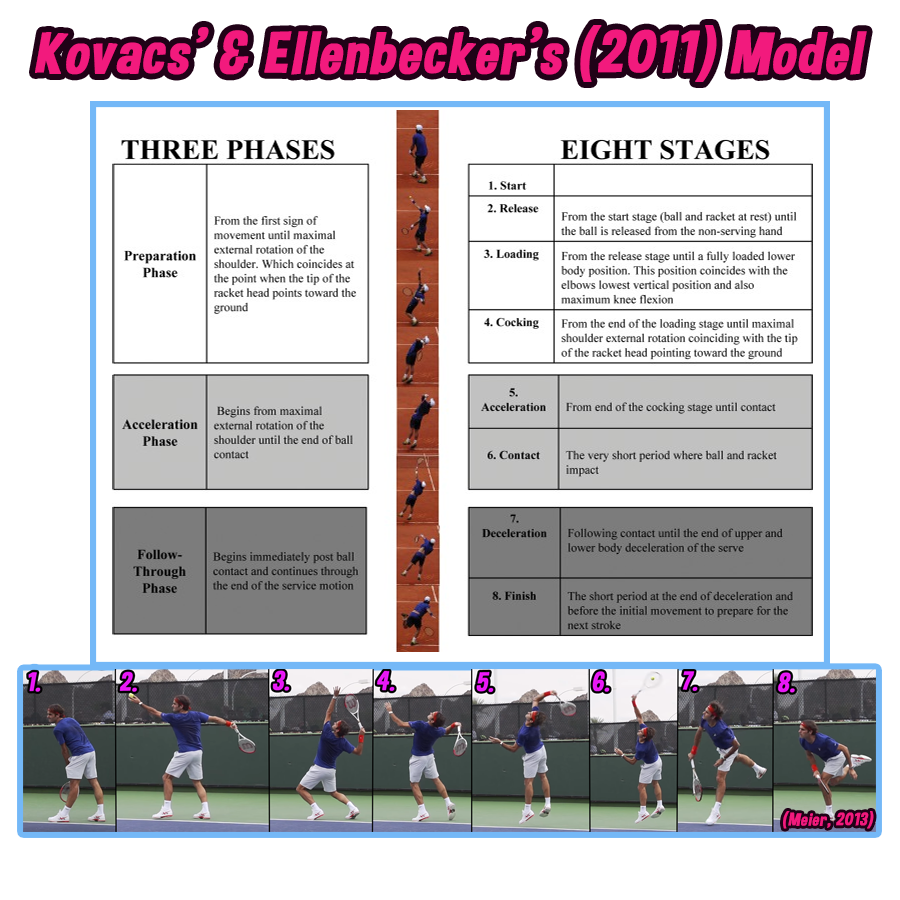
Whilst individual serving styles are unique, Abrams, Harris, Andriacchi, & Safran (2014) highlighted three distinct serves: flat, kick and slice. The flat serve, characterised by reduced topspin, produces the greatest horizontal velocity following contact, and will be the focus of this blog (Sakurai, Reid, & Elliott, 2012). Furthermore, the serve can be disassembled into three movement phases: preparation, acceleration and follow-through, and further into eight unique stages as evident below (Kovacs & Ellenbecker, 2011).
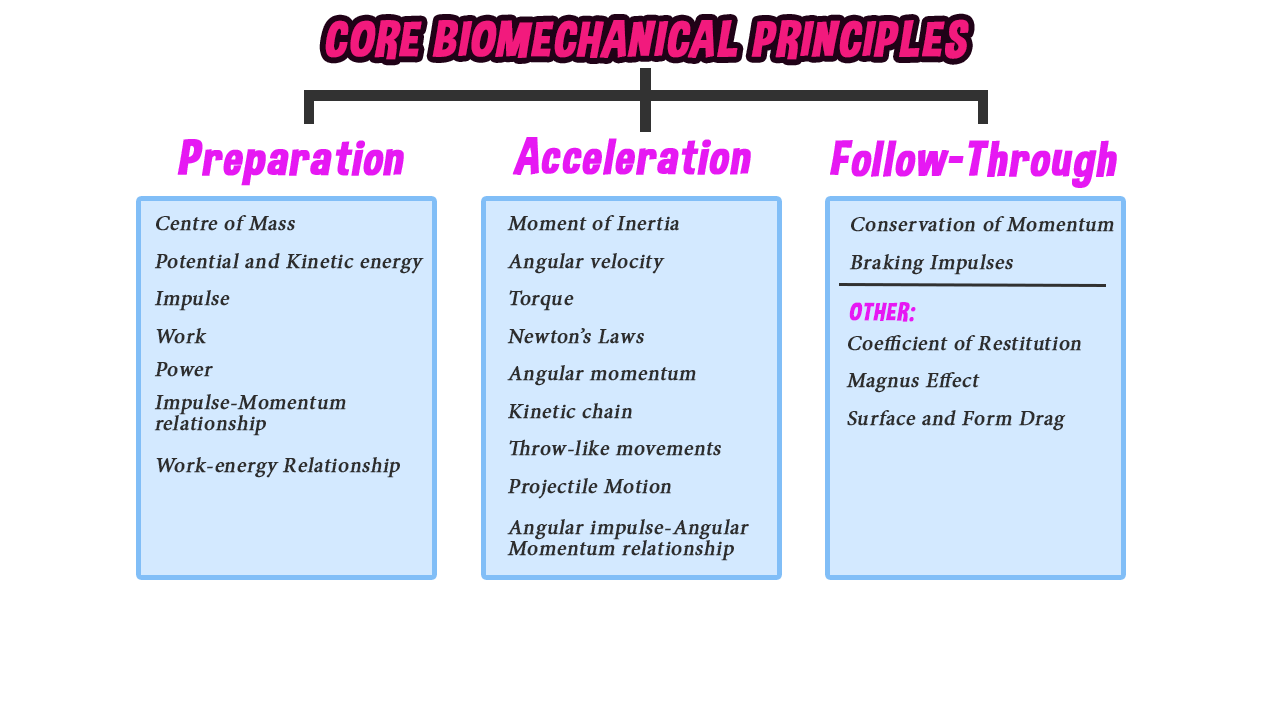
Nevertheless, ensuring individual optimised force production is reliant on key biomechanical principles; therefore, the principles to be explored are as follows:
 HLPE3531 Tennis Serve Analysis